
Polyurethane Waterproof Coating: A Practical Solution for Roof Leakage

Roof leakage usually doesn’t happen suddenly. It starts small—maybe a damp patch that appears after rain, or a thin crack that doesn’t look serious at first. Most people ignore it until it starts spreading.
The problem is simple. Roofs are exposed all the time. Heat during the day, cooling at night, rain, dust, pollution—it all slowly affects the surface. Over time, small cracks open up, and water finds its way in.
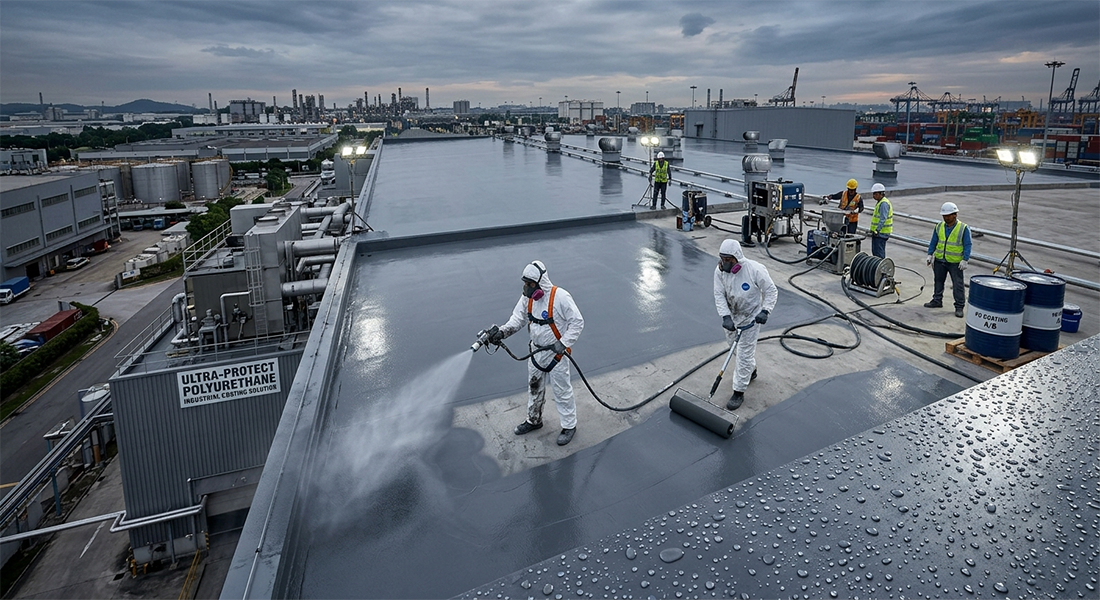
One of the commonly used solutions for this is polyurethane waterproof coating. It’s basically a liquid coating that, once applied, forms a protective layer on the surface. Nothing complicated—it just helps stop water from entering through the roof.
At Aqueon Global, this is typically used in projects where people want something that lasts, not just a quick patch-up job.
What it actually is
In simple terms, it’s a liquid that gets applied on the roof and then turns into a flexible protective layer.
That layer helps block water but still moves slightly with the building. That part matters because buildings aren’t completely still—they expand and contract with temperature.
It is usually used on terraces, flat roofs, basements, water tanks, and similar areas where water exposure is constant.
How it works (in real terms)
First, the surface has to be cleaned properly. If that step is ignored, nothing else works well.
Then the coating is applied. It spreads over the surface, settles, and slowly cures into a solid layer.
Once it’s done, you basically get a continuous waterproof film that doesn’t have joints or gaps where water can enter.
Why people use it
The main reason is simple—it reduces repeat leakage problems.
It can handle small cracks, it sticks well to concrete, and it doesn’t have weak joints like traditional systems. In areas where water tends to sit or collect, it performs better than many older methods.
It also lasts longer, so you don’t end up doing repairs every monsoon season.
Where it is normally used
You’ll usually see it on:
- Roof terraces
- Parking areas
- Basements
- Water-retaining structures
- Large concrete surfaces
Basically, anywhere water exposure is regular or long-term protection is needed.
A simple comparison
Old waterproofing systems like bitumen or cement coatings still exist, but they tend to crack or wear out faster in some conditions.
Polyurethane behaves differently—it stays flexible, handles movement better, and generally holds up longer if applied properly.
It may cost more at the start, but it usually reduces repeated repair work later.
At Aqueon Global
Most of the work here is focused on making sure waterproofing actually lasts in real conditions—not just in theory.
Heat, rain, and long exposure are what really test these systems. The goal is simple: reduce leakage issues and avoid the same problems coming back again and again.